

Most of us are living by invisible rules we never chose.
Learning to see them is often the first step toward living with greater intention, clarity, and energy.
The systems that shape us are often invisible until we learn to see them.
I grew up in a multigenerational home in Bombay, where over thirty family members created a constant rhythm of connection, expectation, and belonging. Even then, I absorbed quiet rules about gender, tradition, ambition, and what was considered possible.
At 19, I left for Chicago. That shift changed how I understood the world and myself.
Living between cultures taught me how deeply our lives are shaped by invisible systems. What feels natural in one place can feel limiting in another. What appears fixed is often inherited, reinforced, and rarely questioned.
That contrast became my training ground.
Today, my work explores how we can better understand the hidden patterns shaping our lives, relationships, work, and identities so we can move through the world with greater clarity, intention, and meaning.

1980 · The First Ray I was born in Bombay, now Mumbai, into a multigenerational family rooted in storytelling and tradition. Named by my grandfather’s sister, a poet, Twisha means “the first ray of the sun,” a name connected to my father, Nahush, whose own name traces back to mythological stories tied to the sun, lineage, and becoming.
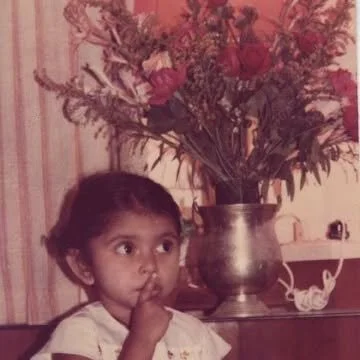
1983 · Watching Closely Even as a child, I was always observing. Quiet, curious, and slightly suspicious of the world around me, I learned early that listening closely often reveals more than speaking first.
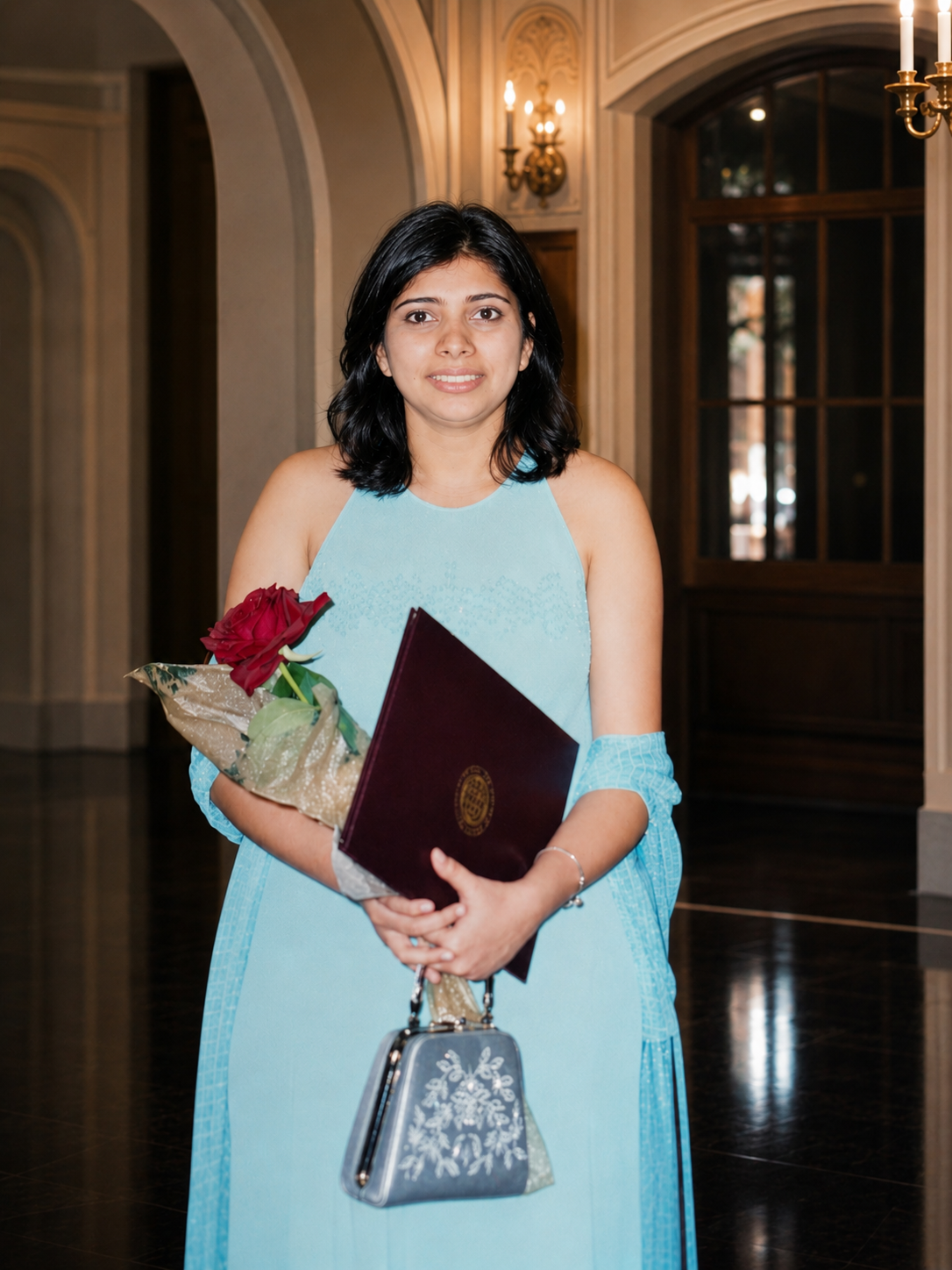
2002 · Ready for What Came Next I graduated from the School of the Art Institute of Chicago with a degree in Visual Communication at a moment when digital design was still in its infancy. As a young immigrant building a life far from home, I didn’t yet know exactly where I was headed, only that creativity, technology, and reinvention would become part of my future.
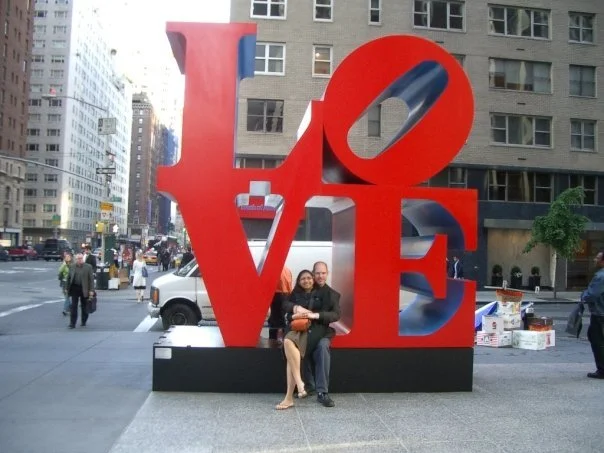
2005 · Love and Reinvention New York was our first trip together. Standing beneath Robert Indiana’s iconic LOVE sculpture, I was beginning to understand how travel, art, and relationships can expand not just where we go, but who we become.
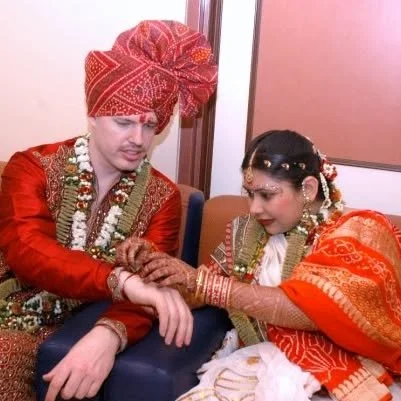
2008 · Choosing Each Other Ours was a marriage built across cultures, traditions, and expectations. In choosing each other, we also chose the ongoing work of building a shared life that honored where we came from while creating space for who we were becoming.
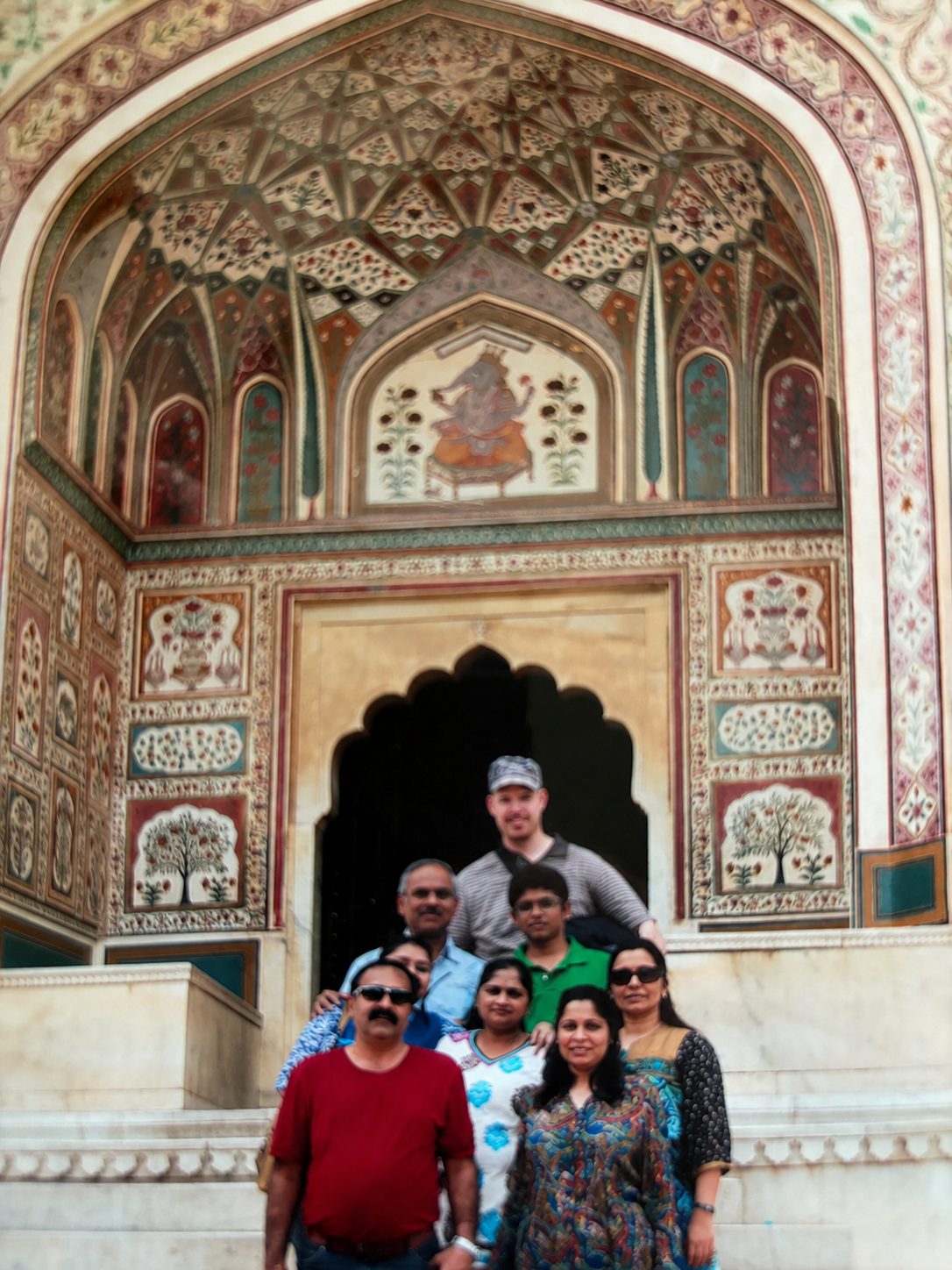
2009 - Exploring my roots. The year after we got married, Thomas and I packed up our lives and spent nearly a year traveling through India. Returning as both insider and outsider deepened my understanding of identity, belonging, culture, and the many worlds we carry within us.
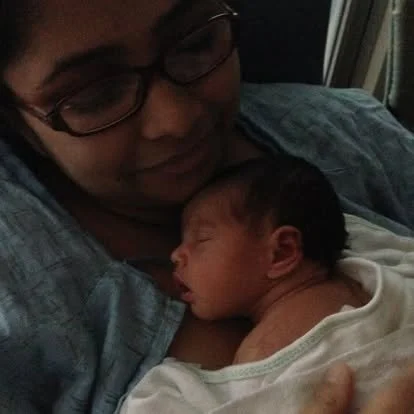
2014 · Becoming a Mother The day my daughter was born, my understanding of love, responsibility, and purpose expanded all at once. Motherhood transformed not just how I cared for someone else, but how deeply I felt connected to my lineage and the invisible women whose sacrifices, strength, and love made my life possible.
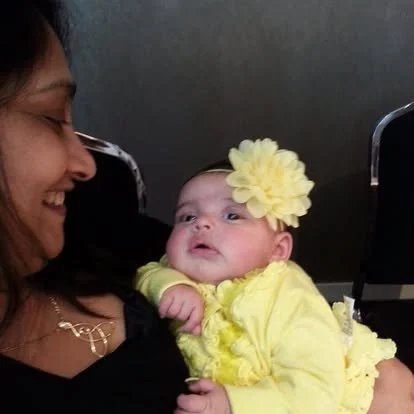
2014 · Losing My Mom A few months after meeting her granddaughter, my mom passed away. Losing and gaining the deepest loves of my life in the same year reshaped my relationship to grief, identity, resilience, and what it means to keep becoming after loss

2014 · Graduate School and Reinvention Earning my master’s degree at the Institute of Design marked a turning point in my life. It gave me the language, tools, and confidence to turn curiosity into a practice of intentionally shaping systems, organizations, and experiences.
What Shaped My Practice
-
How culture, gender, migration, and belonging quietly shape identity.
I grew up in a bustling multigenerational home in Bombay, where our door was always open for chai, conversation, and community. But alongside that warmth, I also absorbed the invisible expectations placed on girls: questions about worth, freedom, ambition, and what kind of future was considered acceptable.
Moving to Chicago at 19 made those systems impossible to ignore. Distance sharpened my awareness of how culture, tradition, gender, and belonging quietly shape what we believe is possible long before we ever make conscious choices for ourselves.
Today, as someone married to a white Midwestern American and raising a biracial daughter, I see identity not as something fixed, but as something continuously negotiated across worlds. That experience taught me that belonging is rarely automatic. It is something we actively design, protect, and practice.
-
How stories shape identity, possibility, and collective change.
I was a voracious reader growing up. In the middle of a loud, communal home, books became both refuge and expansion. I could stay connected to the life unfolding around me while quietly traveling to other worlds, questioning assumptions, and imagining perspectives far beyond my own.
For the shy kid in me, stories created possibility before I had language for it. They taught me that identity could be layered, that people could evolve, and that the world did not have to stay exactly as it was handed to us.
As an adult, I’ve continued that practice through book clubs and communities built around conversation and reflection. Again and again, I’ve seen how stories help people step outside rigid roles, embrace complexity, and imagine new ways of living and leading.
The same pattern shows up inside organizations. Some of the most meaningful transformations begin when a small group shares a new narrative powerful enough to shift perspective, build influence, and rally people toward change together.
-
How human-centered design taught me to move from reaction to intentional change.
I trained at the Institute of Design in Chicago, where I learned to approach problems by looking beyond symptoms and into the systems, behaviors, and assumptions underneath them. Human-centered design gave me a language for something I had been intuitively noticing my entire life: people are constantly shaped by environments they did not consciously create.
What began as learning how to design products evolved into a deeper practice of understanding how teams, organizations, and communities make decisions, distribute power, define success, and create meaning together.
Design taught me that change rarely comes from forcing people harder. It comes from redesigning the conditions around them. That shift fundamentally changed how I lead, teach, parent, and move through the world.
-
How organizations reveal the hidden forces that shape behavior and decision-making.
My career has taken me inside large organizations like Target, Venmo, BMW, and Grainger, where I saw firsthand how invisible systems quietly shape outcomes. Metrics influence behavior. Hierarchies determine whose voices are heard. Processes become rituals people stop questioning, even when they no longer serve the work or the people inside them.
Through strategy, design leadership, and product innovation, I learned that many organizational problems are not actually about talent or effort. They are symptoms of misaligned systems, unclear incentives, inherited assumptions, and measurements that reward motion over meaning.
That experience taught me how to diagnose hidden friction, challenge default ways of working, and help teams redefine success in ways that create greater clarity, alignment, and long-term impact.
-
Why sustainable impact requires designing for energy, not just achievement.
Leadership is not just about vision. It’s about stamina, energy, and the ability to keep showing up without losing yourself in the process.
Working inside high-pressure, high-stakes environments taught me how invisible drains quietly shape the way people work, lead, and relate to one another. Burnout is rarely caused by a single moment. It often emerges from systems that reward constant urgency, emotional overextension, and achievement without renewal.
Over time, I became deeply interested in the relationship between energy and design: how our calendars, habits, expectations, environments, and relationships either sustain us or slowly deplete us.
My writing and teaching explore how to recognize those hidden patterns, redesign for restoration, and create forms of sustainable intensity that support both ambition and well-being at work and at home.
-
How creativity helps us reconnect to meaning, possibility, and ourselves.
Creativity has always been one of the ways I make sense of the world. Whether through art, writing, conversation, teaching, movement, or reflection, creative practices help us slow down enough to notice what we’re feeling, questioning, and becoming.
In a culture that often prioritizes productivity over presence, creativity creates space for curiosity, imagination, and emotional honesty. It allows us to hold complexity, sit with contradiction, and explore possibilities that don’t yet have clear answers.
Over time, I’ve come to believe that creativity is not reserved for artists or certain professions. It is a deeply human capacity. It shapes how we solve problems, care for others, navigate change, and design more meaningful lives.
For me, creativity is less about making things and more about learning how to see differently.